You Again Control a Single Insect but There Are B Birds Flying Along Known Paths
Often Asked Questions
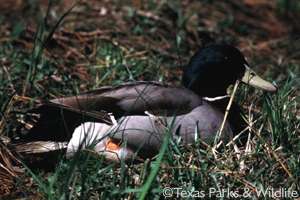
Mallard
- What is migration?
- Do all birds drift?
- Why do birds drift?
- Where practise migrating birds go?
- Exercise birds follow established migratory routes?
- How far exercise migrating birds travel?
- How fast do migrating birds fly?
- How high practice migrating birds fly?
- What birds migrate during the day?
- What birds drift at night?
- Exercise birds normally drift in groups?
- How well can birds navigate?
- What do birds apply for orientation and navigation?
- How practice birds navigate at night?
- Practice birds use landmarks to navigate?
- What initiates migration?
- What external factors set up birds to migrate?
- What external factors affect fourth dimension of migration?
- Does the temperature touch migration?
- How does the weather affect migration?
- How did migration originate?
- Why do birds fly to specific locations in the spring and fall?
- Are there any ecological implications with migration?
- How is migration coordinated with the seasons?
- How practise man activities affect migratory birds?
- What are some homo caused hazards for migrants?
- Do about migrants return after the winter?
- How does migration do good birds and the environment?
- What are migratory bird treaties?
- How does migration affect the bird life of Texas?
- How are migratory birds important to homo?
- Why is there an involvement in migratory birds in Texas?
- What exactly is a Nearctic-Neotropical Migrant?
- What is migration?
- Migration is the cyclic or periodic travel of an animal as it returns eventually to its original place of difference. Migration is often annual and is closely linked with the cyclic pattern of the seasons. It is nearly evident among birds, which have a highly efficient means for traveling swiftly over long distances. The migration of almost birds is a yearly cycle.
- Do all birds migrate?
- Not all birds drift. The more severe the climate of an surface area, the greater pct of nesting birds migrate. Ii-thirds of bird species found in the United States migrate, some merely brusk distances to more southern states. Those that do drift have adaptations non seen in their non-migratory relatives. Migratory birds tin build fat stores as an energy source for long flights. Migratory birds usually take longer, more pointed wings and weigh less than related not-migratory birds.
- Why do birds migrate?
- There are a number of explanations for migration. (1) Birds drift to areas where food is more abundant, (2) there is less competition for nesting space, (3) the climate is milder, or (4) the daylight hours are longer. These heighten the chances of survival of a bird and its brood. Almost birds require a rich, abundant supply of food at frequent intervals because of their high metabolic rate. Adequate food is not available throughout the yr in near regions. North American birds must endure the hazards of wintertime or drift to more than friendly climates. In winter they drift to the warmer, southern regions of the United States, Caribbean area, Mexico, Primal America and Due south America where nutrient is arable. In the spring, these birds fly north to habitats where spring and summer provide more food production and less competition for food and nesting sites than in their winter habitat. Summertime at northern latitudes besides means more daylight hours to seek nutrient for themselves and their nestlings.
- Where exercise migrating birds go?
- Many nesting birds in Canada and the northern United states of america wing south to the tier of states along the Gulf of United mexican states where the winter climate is more favorable and nutrient is abundant. More than 300 species of birds that nest in the United States and Canada drift to the Westward Indies or Central and Due south America. The principal wintering area for Neotropical Migrants extends through Mexico and Central America to Panama; it has the highest density of winter bird residents in the earth.
- Do birds follow established migratory routes?
- The migratory flights of many migrating birds follow specific routes, sometimes quite well-defined, over long distances. The shape of the continent determines the main routes of migration. These routes run north to southward and include the Atlantic oceanic route, the Atlantic Flyway, the Mississippi Flyway, the Central Flyway, the Pacific Flyway, and the Pacific oceanic route (meet Department ii). Geographic factors, ecological conditions and meteorological conditions determine such routes. The majority of migrants travels along broad airways within these flyways changing their flight direction in response to the direction and forcefulness of the wind. Some routes cross oceans or huge bodies of water. Some modest songbirds migrate 500-600 miles across the Gulf of United mexican states.
- How far practise migrating birds travel?
-
Migration usually involves latitudinal or altitudinal travel. The distance may be a few miles or thousands of miles. In mountainous areas, birds, mammals and others move just a few miles from upper zones where they breed to the foothills or plains during seasons when the conditions is severe and unfavorable. Clark's Nutcracker, for instance, of the Rocky Mountains nests in the summer high in the mountains then winters in the lower forests.
The Ruby-throated Hummingbird nests from the southern United States upward into Canada and winters as far south equally Panama. Some of these little birds wing nonstop across the Gulf of Mexico (upwardly to 600 miles). Many flycatchers fly similar routes. Some birds, such as robins or grackles, winter in large flocks in the Gulf States.
The seasonal flights of American wood warblers are spectacular. Some winter in the Gulf States and the West Indies; others fly as far s as Republic of guyana, Brazil and Republic of peru. Tanagers and Bobolinks migrate through the eastern U.s.a., by Republic of cuba to southern Brazil, Bolivia, and Argentina.
- How fast practice migrating birds fly?
- The speed of flight depends largely on the species and the type of terrain covered. Birds fly faster when migrating than otherwise. Birds seem to wing faster in spring migration than in the fall. Migrants fly faster over water than over land. The American Gilt-Plover may fly over 2400 miles southward over the Atlantic Ocean at nigh sixty mph. Common Loons are among the fastest flyers at almost 70 mph. Woodcocks on the other mitt, wing at merely over x miles per hour. Birds migrating over land may make stops for food and residuum.
- How high do migrating birds fly?
- Most migrants fly at low altitudes, commonly below 7400 feet. Small birds migrating at dark fly between 800-1600 feet. In the daytime they fly much lower, often below 200 feet. Some fly much higher, the record is held by the Bar-headed Goose: 29,500 anxiety higher up sea level, over the Himalayas in India.
- What birds migrate during the day?
- Swift, potent fliers and hunters are frequently daytime, or diurnal migrants. These include pelicans, herons, birds of casualty, hummingbirds, swifts, swallows and finches. Some of these birds can feed on the wing.
- What birds migrate at nighttime?
- Night or nocturnal migrants usually are birds that live in thick vegetation and rarely venture out of it. They include waterbirds, cuckoos, flycatchers, thrushes, warblers, orioles and buntings. Night movement gives them protection from their diurnal predators. They feed and rest past mean solar day to build up energy stores for their long-distance flights at nighttime.
- Practice birds unremarkably drift in groups?
- Most birds are gregarious during migration, even those that are unremarkably solitary at other times such as insectivores and birds of prey. Birds, such every bit shorebirds and waterfowl, with similar habits often migrate together. Migrating flocks will frequently prove remarkable cohesion. Traveling in large groups provides safe for individual birds past confusing predators and making it difficult to option out a specific victim. A characteristic migratory formation is the 'Five' of geese, ducks, pelicans, and cranes with the betoken turned in the direction of flight.
- How well can birds navigate?
- Migrants often return to brood in the aforementioned locality where they were hatched. This journey may cover thousands of miles over many types of terrain and through extremes of weather. Birds show an astonishing ability to orient themselves and home in on their destination. Migrating birds have many potential cues for orientation and navigation between summertime and wintertime habitats. They do not depend on any unmarried navigational cue.
- What do birds use for orientation and navigation?
- Information technology has been demonstrated that birds use various guiding factors. These include topographic landmarks (mountains, valleys, rivers, coastlines), ecological factors (vegetation zones), and climatic changes (air masses differing in temperature and humidity). Birds have as well demonstrated a compass sense. They are able to fly in a item constant direction regardless of their starting point with respect to their destination. Birds take shown that they tin can relate a release point to their domicile area, determine which direction to take (orientation), then maintain that direction of flight (navigation). We presume this to be, in part, due to sensitivity to the intensity and management of the earth'due south magnetic field.
- How do birds navigate at night?
- Migrant birds that travel at dark employ the stars to determine their bearings. In clear weather, captive migrants head immediately in the proper direction using only the stars. They can orient themselves correctly to the arrangement of night skies projected on the dome of a planetarium. Birds apparently tin decide their longitude and latitude by the position of the stars. Evidence also indicates that the glare of the moon tin interfere with this orientation.
- Practise birds utilize landmarks to navigate?
- Many birds, especially diurnal migrants, can recognize the topography below them and tin navigate using familiar landmarks. Some birds follow coastlines to avoid flying over large bodies of water. At times, many follow river valleys. River valleys are similar highways offering direction and shelter and food when the birds land to rest. Some birds, such as hawks, that migrate past day concentrate forth mount ranges where they ride updrafts along the mountains.
- What initiates migration?
- The aforementioned factors stimulate migration and reproduction. Before migration, metabolic changes occur. The thyroid gland controls these changes. Food consumption increases and fatty accumulates under the pare tissues. This volition provide the free energy for long flights. The Cerise-throated Hummingbird stores plenty fat to fly 26 hours not-stop at 25 miles an hour. This is enough to span the Gulf of Mexico. Variations in metabolism and related phenomena are controlled by another endocrine gland, the pituitary, located in the lower function of the encephalon. It sends out instructions by style of hormones.
- What external factors fix birds to migrate?
- The pituitary is influenced by environmental factors such as day length and the intensity of the sun. The pituitary responds to increasing day length in springtime past accelerating the development of the gonads and all other metabolic processes, including the development of the thyroid, to ready the bird for migration.
- What external factors affect time of migration?
- If pituitary functions and variations in day length were the simply factors, migration would occur regularly every year. Such a lack of flexibility could be catastrophic for migrants considering of variations in biological and meteorological conditions. Ecology factors such as weather, arrival of spring, flowering, foliation, insect hatching and availability of food vary from year to year. The pituitary prepares the bird for migration. The proper ecological conditions are necessary to trigger it. Birds can be wearied and emaciated by the time they achieve stopping areas. They gorge themselves to furnish their fatty reserves before preparing for the next leg of the flight.
- Does the temperature affect migration?
- Atmospheric condition and temperature are very important-the first cold front of the autumn usually brings with information technology flocks of migrating geese. Many birds follow a temperature gradient equally they return to nest in the bound. Birds vary in sensitivity toward temperature and other environmental weather condition. Woodcocks and snipe rely on surrounding weather condition atmospheric condition to initiate their leap and fall migrations. The patterns of their flying depend on temperature and barometric force per unit area. Other birds such as swifts, swallows and orioles are less conditions dependent and the dates of their deviation and arrival occur with regularity each year (i.east., the swallows at Capistrano).
- How does the weather affect migration?
- Weather is one of the chief external influences on migration. Cool air masses moving s in the fall can trigger migratory flight. Cool air brings high pressure, low or falling temperatures and winds moving in the direction of flying and articulate skies. If the cool air meets warmer air, clouds, atmospheric precipitation and fog may event. Fog, especially, causes birds to descend to the ground and terminate migration. Sudden changes in the conditions can be disastrous for birds. In the bound a warm, moist mass of air (low pressure with higher or rising temperatures) moving north over the Gulf of Mexico can start a wave of migrating birds to motility north from the American Tropics or southern Usa. A southward moving common cold front meeting such a warm air mass tin result in heavy rains and high winds. This can finish migration immediately or inside 24 hours. These spring "fallouts" or "groundings" of migrants may occur when the migrating birds literally autumn into sheltered areas seeking food and refuge. This tin can be disastrous if the migrants are forced down into the ocean drowning thousands of birds. Resumption of southerly winds and ascension temperatures starts migration due north again.
- How did migration originate?
- The roots of the migratory habits of modern birds are believed to date back millions of years, and were tempered by environmental changes caused past the Ice Ages of the Quaternary period over the last 2,500,000 years. Migration, every bit is known amid mod birds, probably adult gradually by stages. As the environment changed, some animals changed their habitat slightly, hardly leaving their domicile region. The movements of others were more erratic, moving toward more favorable places. These first stages of migration were stabilized past natural selection. As winters grew more severe, much of a given bird population probably perished rather than attempting to flee whatever unfavorable conditions. A fraction of this population probably sought more favorable conditions elsewhere. Natural option favored the 'migrants' and migratory tendencies were retained.
- Why practise birds fly to specific locations in the leap and fall?
- In some cases, the original habitats were in present-twenty-four hours southern wintering areas. The birds developed a trend to leave in spring to breed in territories to the north that were less crowded. Autumn brought seasonal changes in weather and declining food supply in these newly settled regions. This forced the birds to migrate dorsum to their erstwhile range for the winter. North American birds that originated in the tropics include hummingbirds, tyrant flycatchers, tanagers, wood warblers, orioles and swifts. In recent geological times these birds gradually spread northward as glacial ice receded and the continent became warmer. Other birds, such as plovers, ducks and geese, originally lived in what are at present their northern breeding areas. Gradual climatic changes forced them to spend winters far to the south. Migrations announced to be the consequences of invasions or emigrations during which animals settle in new regions during role of the annual cycle, and so render to the original region to complete the cycle. Migration patterns are not fixed. As climates alter, migration routes alter equally well, causing birds to lengthen or shorten the routes or to abandon them altogether.
- Are there any ecological implications with migration?
- There are many ecological implications of migration. The sequence of migratory movement is closely integrated with the annual bike of ecosystems that are characterized by productivity fluctuations. The food resources of some regions could not exist adequately exploited without bird populations moving. Migratory beliefs occurs in species located at specific trophic levels where maximum fluctuation in nutrient production occurs in both breeding and wintering regions. Many migrant birds avoid primary equatorial forests where productivity is unremarkably constant throughout the yr and food surpluses do non occur. They do, however, besiege in savannas where productivity varies with the seasons.
- How is migration coordinated with the seasons?
- A coordinated sequence is credible in the case of birds migrating from the northern Chill regions to tropical winter regions; both life zones show broad fluctuations in productivity. In the Arctic, vegetation and animal production are very high during the summer. Ducks and shorebirds nest there in great numbers, exploiting the nutrient resources. Equally winter comes, days shorten and nutrient becomes scarce. The waterbirds migrate to southern climates where the rainy season has caused food production to increase to optimal levels. In winter, ducks and shorebirds concentrate in the almost favorable areas and remain until spring when productivity there is lowest. By so, weather condition at the convenance areas are again favorable for the birds. The life wheel of these birds is closely attuned with the productivity cycles in their breeding and winter habitats. The size of populations is controlled by the chapters of both habitats to sustain them.
- How practice homo activities affect migratory birds?
-
The winter habitat of the "Lesser" Snow Goose is in the southeastern quarter of Texas. Combinations of mild weather, ample winter food supply and protection on numerous wildlife refuges in its wintering range, every bit well as the bird's natural wariness, have led to a tripling of the snowfall goose population in the last decade. The summer nesting range around Hudson's Bay in Canada is being destroyed by overpopulation of geese. This may lead to a collapse of the habitat'southward power to support the goose population. This can lead to a major dice off and nesting failure of the geese and any associated wildlife in this area of Canada.
Woods immigration for agriculture and petroleum exploration in Mexico and Fundamental America has decreased the winter habitat of many migrant birds. The cracking fires of 1998 in Mexico will have, as yet, unknown effects on migrant birds. The fires have likely decreased forest habitat even further though. Migrants that returned that fall encountered decimated habitat and likely experienced a stressful winter resulting in fewer migrants returning the next spring. No one knows for sure. On the other hand, the fires created open up areas that are the varied, transitional vegetation zones that many migrants adopt as habitat.
- What are some human caused hazards for migrants?
-
Flying at night or in fog, many birds collide with tall structures. Lighthouses and skyscrapers are notorious killers of migrants. Reflective windows can be deadly. Birds see reflections of sky or trees and fly into them. Electronic towers for radio, television, cellular phones, etc. and their supporting cables kill thousands of migrating birds during migration.
Habitat loss and deposition is a much greater problem. Habitat needed for food and shelter in winter is disappearing in Latin America. Clearing of forestland and plowing of grassland for crops destroys the diverse habitat that is necessary for many species of birds to survive. In the United states of america and Canada at that place is often not enough habitat for some species to enhance their young. Where there is appropriate habitat, it may be also close to human disturbances or exist also modest an area. The populations of many North American bird species take decreased severely over the last 100 years.
A serious homo-caused hazard to migratory birds is pet cats. Free-roaming cats take a high toll on migratory birds. Scientific studies evidence that each year cats may kill hundreds of millions of migratory songbirds. Cats are serious threats to fledglings, birds roosting at night and birds on nests. An indoor cat is the best kind of cat.
- Practise almost migrants return after the wintertime?
-
Many birds perish during migration and the winter flavour. It is believed that less than half the birds that get out the nesting grounds in autumn migration volition return the following spring. Migration over water is ane of the nearly hazardous times for birds, especially pocket-size songbirds. Millions of migrating birds perish at ocean. These are often young birds or birds that are blown off-shore or forced downward by bad conditions.
Wildlife experts study waterfowl populations intensively to set hunting seasons and limits. They have a good idea of how many waterfowl head south each fall, about 100 million. About 40 1000000 return; hunters impale about 20 meg and well-nigh 40 1000000 fall victim to predation, accidents, environmental factors and affliction.
- How does migration benefit birds and the surroundings?
- Migration has considerable ecological significance. It enables fast-moving animals to exploit fluctuating resource and to settle in areas where they could not live if incapable of rapid travel. On the other hand, peaks of nutrient product would be unexploited without the periodic presence of migratory populations.
- What are migratory bird treaties?
- In 1918, the Usa and Great U.k. (for Canada) ratified the Migratory Bird Treaty that closed hunting for sure groups of birds that migrated across their mutual borders. Hunting was permanently closed on insectivorous birds and other non-game birds. Game birds (including ducks, geese and cranes) were given protection except for an almanac hunting season that could not exceed three and a half months. Boosted treaties were signed with Mexico (1936), Japan (1972), and the USSR (1976) protecting migrants between the United States and those countries. These treaties protect most naturally-occuring species, while most introduced species are not protected in the U.Due south. (e.chiliad.,House Sparrow, European Starling and Rock Dove [feral pigeon]).
- How does migration affect the bird life of Texas?
- The upper coast of Texas is in a truly unique position to observe migration. The country occurs directly in the center of the Fundamental Flyway. Most birds that motion forth this road travel through Texas and eventually through the Upper Coast of Texas. Birds traveling the Atlantic Flyway during the fall reach the Florida panhandle, so may turn west and follow the Gulf Declension to Texas. Birds of the Mississippi Flyway follow that great river organization to the Gulf and then either cross it or plough westward as well. The Pacific Flyway funnels birds between the Rocky Mountains and the Pacific Bounding main. The Rockies end at Large Curve in Texas. Birds may be funneled to Big Curve where they tin can cross over the state and follow the Rio Grande or other watercourses to the Declension. Texas has recorded 615 species of birds, more than than any other land. These are mostly migrant birds that have followed one or more of these flyways into our Country.
- How are migratory birds of import to man?
- Migratory birds take considerable economic bear upon in North America. Since European settlers first came to the New World, they hunted various birds, such equally ducks and geese, rails, doves and shorebirds, for nutrient and sport. During the late 19th century, many species were hunted to near extinction for the market as nutrient and feathers for adornment on women's hats. Every bit their numbers dwindled, controls and seasons were instituted to stop their decline and stabilize the populations. Laws established to protect nongame birds and regulate hunting of game birds include the Migratory Bird Treaties mentioned in a higher place. Today, regulated hunting is a major industry in many areas of the The states. Most nongame birds were recognized to be welcome allies confronting insect pests. Most of the migratory birds of North America are insect eaters. Healthy, stable populations of these "songbirds" help to keep insect pests within tolerable limits. There are numerous instances where flocks of birds have descended on areas threatened with disastrous insect infestations and virtually eliminated the threat. All birds accept increasing recreational value as birdwatching and other forms of nature related activities go more popular. Ecotourism, including birdwatching, camping ground, hiking, nature report and photography take go part of a multi-billion dollar manufacture. Throughout the United states of america, more people are engaged in nature tourism than either hunting or fishing. Together, hunting, fishing, and ecotourism are role of an manufacture that is worth over $100 billion annually in the United Sates alone. Information technology pays in many means to protect and maintain our natural assets.
Why is at that place an interest in migratory birds in Texas?
Of the 338 species that are listed as Nearctic-Neotropical migrants in North America (northward of Mexico), 333 of them (or 98.v%) take been recorded in Texas. This ways that of the 615 species of birds documented in Texas, 54% of them are Nearctic-Neotropical migratory birds. Texas is important to these migrants and these migrants are important to Texas.
What exactly is a Nearctic-Neotropical Migrant?
These species are collectively known by a host of other names. The species that comprise this group basically breed in temperate latitudes (i.e., U.Due south. and Canada), merely get out for the winter for tropical latitudes further south (i.e., Fundamental and South America). Their migratory habits are part of their lives and heritage.
*Common names follow the 7th edition of the AOU Checklist.
Added modifiers in quotes correspond distinct subspecies.
Contact Information:
For more information, delight contact:
Texas Parks and Wild fauna Department
Wildlife Diversity
4200 Smith School Road
Austin, Texas 78744
brinkeranciverivens.blogspot.com
Source: https://tpwd.texas.gov/huntwild/wild/birding/migration/faq/
0 Response to "You Again Control a Single Insect but There Are B Birds Flying Along Known Paths"
Post a Comment